


What Are Common Legal Defenses Against Attempted Crime Charges?

When someone says you “attempted” a crime, it can feel unreal. Like the story being told about you isn’t the one you were living. Maybe there was confusion, maybe you were in the wrong place, or maybe it looked worse than it was. Attempt charges are strange that way.
The act doesn’t even have to happen, yet it can still shake your future. So, the real question becomes what was meant, and what actually occurred. A criminal defense attorney in Riverside helps you sort through that difference, piece by piece.
What Constitutes an Attempted Crime?
Under California Penal Code §21a, attempt means a person had specific intent to commit a crime and performed a direct but ineffectual act toward completing it. Not planning. Not thinking. A real, tangible step.
Prosecutors must prove both elements beyond a reasonable doubt. Even then, penalties under Penal Code §664 usually reach only half the sentence of the completed offense, except serious cases like attempted murder.
Sometimes, courts even dismiss charges when evidence shows lawful self-defense or a lack of intent to commit any crime. Those details matter more than most realize.
Common Legal Defenses Against Attempted Crime Charges
When you face an attempt allegation, your lawyer’s job is to break the state’s theory apart, piece by piece. Every element counts, and if one fails, the entire charge can collapse.
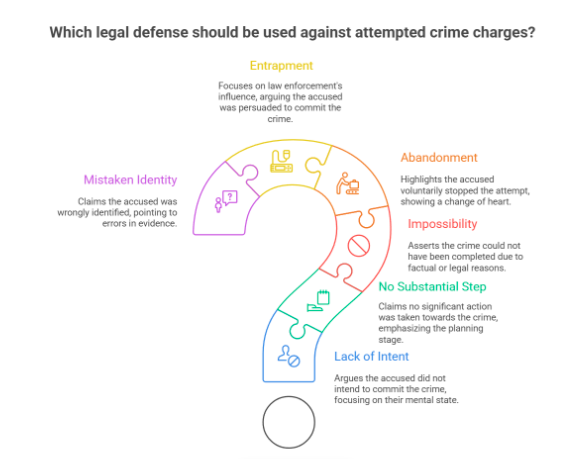
Lack of Intent
Attempt hinges on intent. Without proof of it, there’s no crime. Your lawyer can show that your actions lacked purpose, were accidental, or were misunderstood.
Courts sometimes reassess charges when evidence clearly shows lawful self-defense or no specific intent to commit an offense.
No Substantial Step
In California, you must take a direct but ineffectual act, not mere preparation. Planning alone, buying tools, researching online, or even talking, doesn’t equal an attempt.
Example: driving near a location isn’t enough; entering with tools ready could be. The difference sounds small, but it means freedom or conviction.
A criminal defense attorney in Riverside knows how to draw that line for juries.
Impossibility
Here’s a tricky one.
- Factual impossibility (like trying to steal from an empty pocket) is not a defense.
- Legal impossibility (where the act wouldn’t actually be illegal) can be a defense, though rare.
| Type of Impossibility | Example | Defense Valid in California |
| Factual | Trying to steal from an empty wallet | No |
| Legal | Attempting to do something not criminal | Sometimes |
Footnote: In California, factual impossibility is not a defense; legal impossibility may be.
Abandonment or Withdrawal
It happens, you change your mind. But under state law, once a direct but ineffectual act occurs, voluntary abandonment is not a defense. If you withdraw before that step, it might show a lack of intent, helping your case. Timing is everything. Your attorney can use early withdrawal to prove hesitation, not guilt.
Entrapment
Sometimes, people get pushed too far by those meant to uphold the law. California follows an objective test (from People v. Barraza): if police conduct would likely make a normally law-abiding person commit the crime, that’s entrapment. It’s about police behavior, not your past.
The U.S. Department of Justice explains entrapment applies when “the accused person alleges that he never would have committed a crime if a law-enforcement officer had not inspired, incited, persuaded, or lured him.”
A criminal defense attorney in Riverside uses this to reveal when enforcement crossed the line.
Mistaken Identity or False Accusation
Surveillance gaps. Unclear footage. Eyewitness errors. Many attempted cases rest on poor identification. Showing inconsistencies, false assumptions, or motives behind accusations can completely dismantle the prosecution’s case.
The Role of Evidence and Legal Strategy
Evidence makes or breaks attempt cases. From text messages to witness statements, every detail matters.
Your lawyer tests not just what exists, but how it was obtained. Chain of custody, warrant limits, and police questioning; each can decide whether evidence survives.
- Track how law enforcement gathered statements or digital records.
- Compare witness accounts against timelines.
- Use everyday language to challenge claims of “intent.”
- Recreate the event from your point of view.
Case Study (October 16 2025) – All Felony Charges Dismissed: We handled a case where the state claimed an attempted felony. After showing inconsistent witness timelines and a lack of a direct act, all charges were dismissed before trial. That’s what careful analysis and persistence can do.
Why Hiring an Experienced Criminal Defense Attorney Matters
Attempt charges feel heavy, but experience cuts through fear. When you work with us, you don’t face it alone.
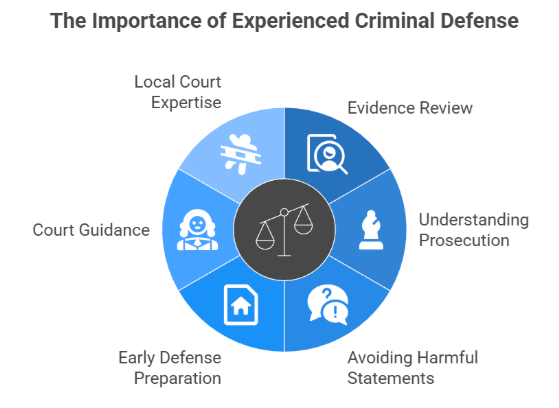
- We examine every element under Penal Code §21a for flaws.
- We challenge how the police interpreted your actions.
- We know when “attempt” crosses from theory to reality.
- We’ve won dismissals in Riverside courts for clients accused of serious felonies.
- We stay reachable, explain plainly, and fight hard for your story.
A seasoned criminal defense attorney in Riverside sees patterns in these prosecutions. At Kia Law Firm, we don’t sell promises; we build defenses grounded in law and proven results.
Our team’s focus is simple: protect your record, freedom, and future. You can explore more about our defense services through our Practice Areas page.
Final Thoughts
Facing an attempt charge doesn’t mean guilt. California law recognizes intent, action, and fairness. With the right defense, you can prove what truly happened and protect your name.
At Kia Law Firm, we’ve seen lives change when clients fight back early, with facts, not fear.
If you or someone close is accused of an attempted crime, contact our team now through our Practice Areas page or reach out directly. Get clarity, real answers, and a path forward today.
FAQs
- What counts as an attempted crime in California?
Attempt means having intent and taking a real step toward a crime, even if it fails. Not plans. Not words. A step that actually mattered.
- Can changing your mind cancel an attempt charge?
Only if you stop before any direct act happens, once that line’s crossed, it’s too late. Your lawyer may still show hesitation, though.
- Is factual impossibility a defense?
No. If someone tries to steal from an empty wallet, it’s still an attempt. The law sees effort, not success, and that’s the key.
- What’s the difference between entrapment and persuasion?
Entrapment happens when police pressure someone who wouldn’t usually offend. Persuasion is softer, no trick, just words. The line’s thin, but real in court.
- How can a criminal defense attorney help in attempt cases?
A lawyer challenges what the state calls “intent,” picks apart weak proof, and explains your actions to the jury in plain, human terms.
- What penalties apply for attempted crimes?
Usually, about half the sentence for that crime. Penal Code §664 says so. But exceptions, like attempted murder, carry heavier punishment.