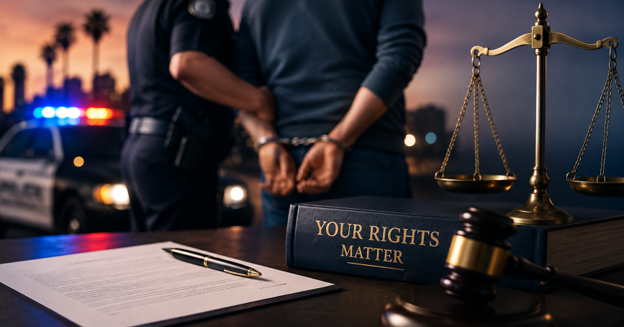
A traffic stop turns into a DUI investigation. A heated argument at home becomes a domestic violence report. A misunderstanding with a coworker leads to criminal charges. One moment and everything changes.
If you or someone you love was just arrested in Riverside, what you do in the next 24 hours will shape everything that follows. A Riverside criminal lawyer can help you protect your rights from the first moment, but only if you call before you say another word to anyone.
The First Thing You Must Do: Stop Talking
This is not legal advice you’ll find buried at the end of an article. It is the single most important thing a Riverside criminal lawyer will tell you before anything else: stop talking.
Police officers are trained to investigate and obtain evidence to assist the prosecution in preparing a case against you. They are not on your side during a criminal investigation. That is not a cynical statement; it is how the system works. Everything you say after an arrest, even something that sounds innocent, gets written into a police report and handed to the prosecutor.
You have the right to remain silent. Use it.
When officers arrive or when they try to question you at the station, say this clearly: “I am exercising my right to remain silent. I want to speak to an attorney.” Then stop. Do not explain. Do not clarify. Do not try to clear up the “misunderstanding.” The moment you start talking, you start building the prosecution’s case for them.
Did the Officer Read You Your Rights?
Before your arrest goes any further, this matters more than most people realise.
If police failed to read you your Miranda rights before questioning you, any statements you made may be inadmissible in court. This does not automatically dismiss your charges, but it can significantly weaken the prosecution’s case. A skilled criminal lawyer will examine exactly when the Miranda warning was given, whether it was given at all, and whether your answers to questions can be suppressed as a result.
- Have your rights been violated?
- Did the officer fail to follow proper arrest procedures?
These questions, among hundreds of others, are the starting point for a real criminal defense. You may have defenses you are not even aware you have. The only way to know is to speak to an attorney before you say another word to law enforcement, a detective, or anyone assigned to investigate the case.
What Happens After the Arrest: The Booking Process in Riverside County
Once you are in police custody in Riverside, the booking process begins.
Here is what to expect step by step.
Step 1: Booking at Riverside County Detention
You will be photographed, fingerprinted, and asked for basic personal information: your name, address, and date of birth. Provide this basic identification. Do not answer investigative questions. Do not sign any documents without speaking to your attorney first.
Step 2: Property Inventory
Your personal property will be collected and stored. You will receive a receipt. Keep this.
Step 3: Medical Screening
A basic health screening is conducted. If you have a medical condition or are on medication, state it clearly. This protects you and creates a record.
Step 4: Holding
You will be placed in a holding cell while bail is processed. This can take several hours in Riverside County, which operates one of the busiest court systems in Southern California.
Step 5: Bail Determination
Bail may be set based on a schedule for minor offenses, or a judge may set it at arraignment for more serious charges. This is where having a criminal lawyer already working on your case makes a real difference. An attorney can argue for a lower bail or for your release on your own recognizance.
Understanding Bail in Riverside County
Bail is the amount you pay or a bail bondsman posts on your behalf to secure your release from custody while your case proceeds.
| Factor |
How It Affects Bail |
| Severity of charges |
Felony charges carry higher bail than misdemeanors |
| Criminal history |
Prior convictions increase bail amounts |
| Flight risk |
Ties to the community (family, employment) can lower bail |
| Danger to the public |
Violent charge allegations push bail higher |
| Prior failures to appear |
Missed court dates can result in bail denial |
Do not sign a bail agreement, a property lien, or any document from the jail or a bondsman without understanding exactly what you are committing to. Call your attorney first.
Your First Court Appearance: The Arraignment
The arraignment is your first formal appearance before a Riverside County judge. This is where the charges against you are read aloud, and you enter a plea.
You have three options at arraignment:
- Not guilty the standard first plea in most cases, regardless of the facts
- Guilty, you admit to the charges (almost never recommended at this stage)
- No contest (nolo contendere) you accept the punishment without admitting guilt; used in specific circumstances
Most criminal defense attorneys will advise you to plead not guilty at arraignment, even if you eventually intend to negotiate a plea. Pleading not guilty keeps every option open. It gives your criminal lawyer time to review the evidence, identify weaknesses in the prosecution’s case, and negotiate from a position of strength.
Judges and prosecutors cannot give you legal advice. Do not rely on anything they say at arraignment as guidance for how to handle your case.
The Mistake That Hurts More Cases Than Anything Else
Most people arrested in Riverside make the same error. They try to explain their way out of it.
They tell the officer what really happened. They give a statement to the detective because they think cooperation will help. They call the person who accused them to “work it out.” They post about it on social media.
Every one of these actions can and will be used against you.
Here is the hard truth: talking without a lawyer present does not make your situation better. It makes the prosecutor’s job easier. You will not out-explain a trained investigator. You will not say the magic words that make the charges disappear. What you will do is give the prosecution material it did not have before you opened your mouth.
The best criminal lawyers will tell you the same thing: the best statement you can make to law enforcement after an arrest is no statement at all.
What a Riverside Criminal Lawyer Does in the First 24 Hours
At Kia Law Firm, the work begins the moment you call, not after your arraignment, not after your first court date.
Here is what happens when you reach out immediately after an arrest.
Rapid Case Review: Attorney Kia Feyzjou reviews the circumstances of your arrest, the stop, the search, and the questioning to identify any constitutional violations before the prosecution has time to solidify its case.
Evidence Protection: Critical evidence disappears fast. Dashcam footage is often overwritten within 30 to 72 hours. Witness memories fade. The sooner a criminal lawyer is involved, the better the chance of preserving evidence that helps you.
Rights Assessment: Were you read your Miranda rights? Was the stop legal? Was the search of your vehicle or home conducted lawfully? These questions have to be answered early. The answers can reshape the entire case.
Bail Advocacy: If you are still in custody, Kia Law Firm moves to secure your release as quickly as possible, whether through negotiating bail or arguing for release on your own recognizance at your arraignment.
Communication Firewall: Your attorney becomes the point of contact for investigators, prosecutors, and the court. You stop fielding calls and questions. We handle them.
At Kia Law Firm, we never charge for the initial consultation. You should be able to choose the lawyer who will fight for you without having to pay upfront fees just to hear the truth about your situation.
What Early Action Actually Looks Like: A Real Case Result
The difference between early legal intervention and delayed action is not theoretical. It shows up in outcomes.
In April 2026, Kia Law Firm represented Elizabeth, a client charged in San Bernardino County with two DUI violations under California Vehicle Code 23152(a) and 23152(b), a standard drunk driving arrest that most people would assume leads to a standard DUI conviction. It did not.
Attorney Kiarash Feyzjou secured a resolution for a dry reckless charge and a pure reckless driving conviction with no alcohol component attached to it. Not a wet reckless (reckless driving involving alcohol), which still carries DUI-related consequences. A dry reckless. Elizabeth’s record will not show a DUI conviction. The charge does not count as a DUI prior. The long-term professional, licensing, and personal consequences of a DUI conviction do not apply.
Results like this do not happen by accident. They happen because the defense built the case correctly from the start, reviewing every angle of the evidence before the prosecution had the opportunity to lock in its position. That is exactly what early involvement makes possible.
At Kia Law Firm, we never charge for the initial consultation. You should be able to choose the lawyer who will fight for you without having to pay upfront fees just to hear the truth about your situation.
Common Mistakes to Avoid in the First 24 Hours
Here are the actions that most frequently damage a criminal defense case before it even starts:
- Talking to police without an attorney present: Statements made without counsel are admissible and almost always harmful
- Contacting the alleged victim: This can constitute witness tampering and result in additional charges
- Posting on social media: Anything you write can be screenshotted, preserved, and presented as evidence
- Signing documents without legal review: Including bail agreements, property liens, or consent forms
- Accepting the first plea offer: Prosecutors make early offers to close cases quickly, not to help you
- Assuming the charge will go away on its own: Criminal cases in Riverside County move through the system fast, and inaction has consequences
Frequently Asked Questions
What should I say to the police after being arrested in Riverside, California?
Say only that you are exercising your right to remain silent and that you want to speak to an attorney. Do not explain what happened, answer investigative questions, or try to clarify anything. Anything you say can be written into a police report and used by the prosecution. A criminal lawyer will advise you on what, if anything, to say once they have reviewed the full details of your case.
How long does it take to get bail after an arrest in Riverside County?
The booking process in Riverside County typically takes several hours before bail is determined. For minor charges, a standard bail schedule may apply, and release can happen the same day. For felony charges or complex cases, bail may not be set until your arraignment before a judge. Having a Riverside criminal lawyer involved from the start means someone is already working on securing your release.
Can charges be dismissed if the police didn’t read me my Miranda rights?
Failure to give a Miranda warning before custodial interrogation does not automatically dismiss the charges. However, it can result in any statements you made during that questioning being suppressed, meaning the prosecution cannot use them as evidence. This is a critical defense issue that your attorney will raise immediately through a motion to suppress evidence.
What happens at the arraignment in Riverside County?
At the arraignment, the charges against you are formally read, and you enter a plea. In most cases, your Riverside criminal lawyer will advise you to plead not guilty at this stage. This keeps all defense options open, preserves time for case review, and creates space to negotiate or fight the charges based on the actual evidence.
Do I have to consent to a search of my car or home?
No. You have the right to refuse consent to a search. If police conduct a search without your consent, a valid warrant, or a recognized legal exception, any evidence discovered may be suppressed under the Fourth Amendment. Whether that happened in your case is one of the first things a criminal defense attorney will assess.
How much does a criminal defense attorney in Riverside cost?
At Kia Law Firm, the initial consultation is always free. You should never have to pay just to understand your rights and hear an honest assessment of your situation. Attorney fees for representation vary depending on the complexity of the charge,e but the cost of going without a lawyer is almost always far higher.
Your Next Step Starts Right Now
Being arrested is terrifying. It does not have to define what comes next.
What happens in the first 24 hours after an arrest in Riverside County determines more about your case outcome than almost anything that follows. The evidence gathered. The statements made. The decisions were taken without legal counsel. These are the things that prosecutors build cases from and the things a Riverside criminal lawyer can challenge, suppress, or dismantle when they get involved early enough.
At Kia Law Firm, we believe you should be able to speak to an attorney before you make any decision without paying upfront fees to do so. Attorney Kiarash Feyzjou has built this firm on one principle: your strongest defense begins before you say a single word without counsel.
Don’t be bullied into a decision before you know your rights.
Call Kia Law Firm now (855) 662-2723 for a free case review, available 24/7.